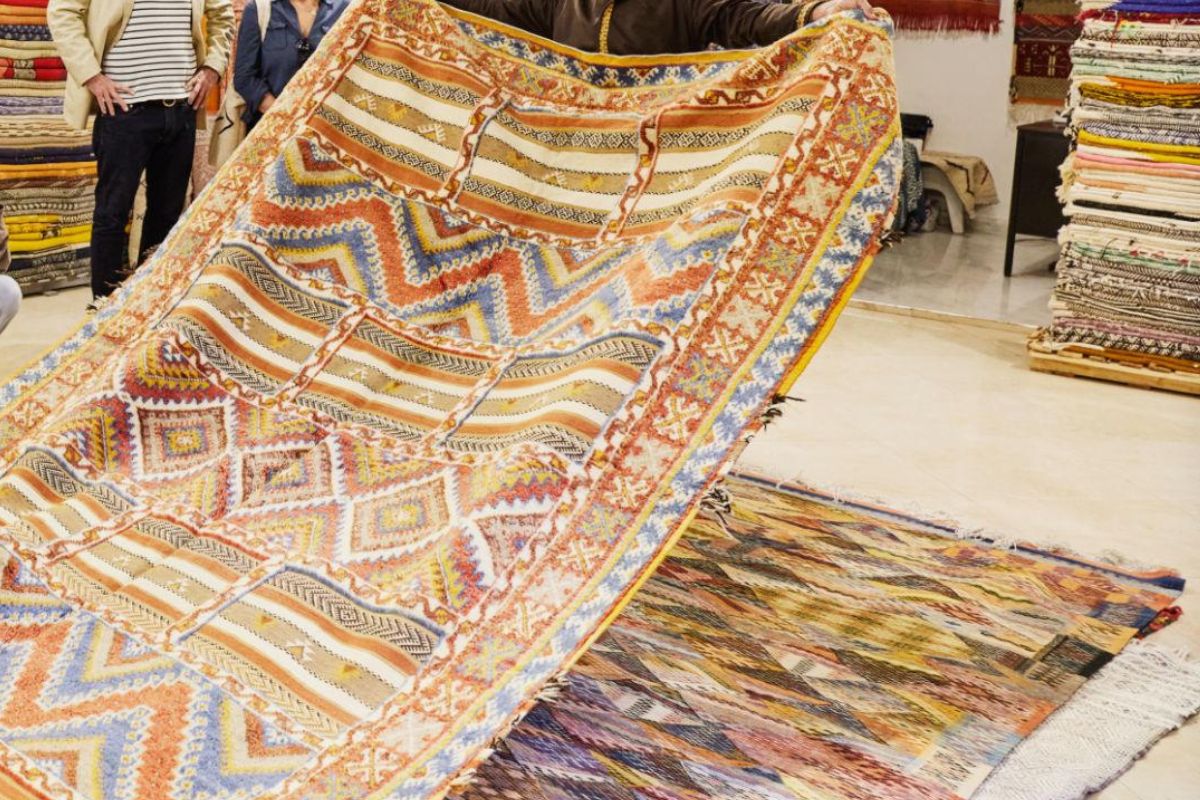
Here are twelve questions, grouped by whether they can actually be answered. Four are about construction and material and a competent seller will answer them precisely. Three are about treatment and condition and are answerable but rarely volunteered. Three are about provenance and usually cannot be answered honestly at all, which is exactly why they are worth asking: the manner of the answer tells you more than the content. Two are commercial and matter more than any of the romantic ones. Pay attention to how a seller handles the questions they cannot answer.
How to use this list
You are not interrogating anybody. Most rug sellers are ordinary businesspeople and most will be glad to talk about their stock in detail.
The reason to ask in this order is that the answerable questions establish whether the seller knows their material, and the unanswerable ones establish whether they will admit a limit. A seller who is precise about construction and says "honestly, I don't know how old it is" has told you they are reliable. A seller who is vague about construction and certain about the tribe has told you the opposite.
Take notes, or ask for the important answers in writing on the invoice.
The four about construction and material
1. Is this hand-knotted, hand-tufted or machine-made?
A good answer is immediate and specific, and the seller will happily show you the back to prove it. A weak answer is "handmade," which covers all three and settles nothing. Check it yourself regardless: what the back of the rug shows takes five minutes to learn and is the one thing here you never have to take on trust.
2. What is the pile, and what is the foundation?
Wool pile on a cotton or wool foundation is the common answer for Moroccan rugs. A seller who does not know what the warp and weft are made of does not know their stock.
3. Is the wool hand-spun or machine-spun?
Answerable, and it should match what your hand tells you. Judging wool quality without a lab covers the feel.
4. Can you show me the back and a folded corner?
Not really a question, and the most useful thing on this list. Any hesitation here is information.
The three about treatment and condition
5. Has this rug been washed or chemically treated, and how?
Chemical washing is normal in this trade, so a straight seller will simply say yes and describe it. This matters because it affects how the wool feels, how the colour will age, and whether the rug smells. How new rugs are made to look old covers what the processes involve.
6. Are there any repairs, reweaves or replaced fringes?
Answerable by anyone who has handled the rug. Repairs are not disqualifying; undisclosed repairs are a description problem.
7. Do the dyes run?
A seller who has washed or tested the rug knows. If they do not know, assume they might, and read natural or synthetic dye, because a colour run is a cleaning constraint rather than proof of anything.
The three about provenance, which usually cannot be answered
8. How old is this rug, and how do you know?
The second half is the whole question. "I bought it from a dealer who said 1970s" is an honest answer and tells you the claim is second-hand. A confident decade with no basis is not better, it is worse.
9. Where was it made, and can you name the town, region or cooperative?
Sometimes genuinely answerable, and specificity is the signal. "The Middle Atlas" is plausible. A named town or cooperative is stronger. A general appeal to tribal tradition is not an answer.
10. Do you know who wove it, or what the seller before you was told?
Almost never answerable, and asking it politely maps the chain. A seller several steps from the loom will say so if they are straight with you.
On all three: "I don't know" is a good answer. These claims are usually inferences from appearance rather than documented facts, and a seller willing to say so is more trustworthy than one who is certain. Use Amazigh alongside Berber when you ask, and notice whether the seller distinguishes a style name from a claim about who made the rug. Is my Moroccan rug authentic covers what can actually be established.
The two commercial ones, which matter most
11. Will you put the description in writing on the invoice, with measured dimensions?
Construction, materials, any treatment, any repair, and any age or origin claim, with the rug's actual measurements at both ends and both sides. This single question converts every answer above into something you can act on later, and a refusal tells you how much the seller believes their own description.
12. What is your returns policy, who pays return shipping, and what happens if it arrives damaged?
The least romantic question here and statistically the one most likely to matter. On a shipped or online purchase it is the term that decides your outcome. Returns and recourse covers why.
How to read the answers as a whole
Look at the pattern rather than any single answer.
Reassuring: precise on construction, relaxed about admitting what they do not know, willing to put it in writing, clear on returns.
Worth pausing over: vague on construction but certain about age and tribe. That combination is the classic shape of a seller who is repeating inherited copy rather than describing an object they understand.
A reason to walk: unwilling to show the back, or unwilling to write the description down. Neither costs an honest seller anything.
And decide separately what you would pay if the provenance story turned out to be unverifiable, because it usually is. If that number is far below the asking price, the story is what you are buying. How to buy a Moroccan rug without getting taken covers the whole set of risks these twelve questions are designed to surface.
FAQ
What is the most important question to ask a rug seller?
Whether the rug is hand-knotted, hand-tufted or machine-made, and then asking to see the back. It is the answer with the biggest financial consequence and the only one you can verify yourself.
What if the seller does not know how old the rug is?
That is a good answer. Age is rarely documented in this market, and a seller who admits the limit is more reliable than one who states a confident decade with nothing behind it.
Should I ask for things in writing?
Yes. A description on the invoice covering construction, materials, treatment, repairs, measured dimensions and any age claim is what turns a conversation into something you can act on if the rug is wrong.
Is it rude to ask this many questions?
No. Most sellers enjoy talking about their stock, and a serious buyer asking specific questions is treated as a serious buyer.
What question do buyers most often skip?
The returns policy, including who pays return shipping. On a shipped or online purchase it is the term most likely to decide the outcome.
Leave a Reply