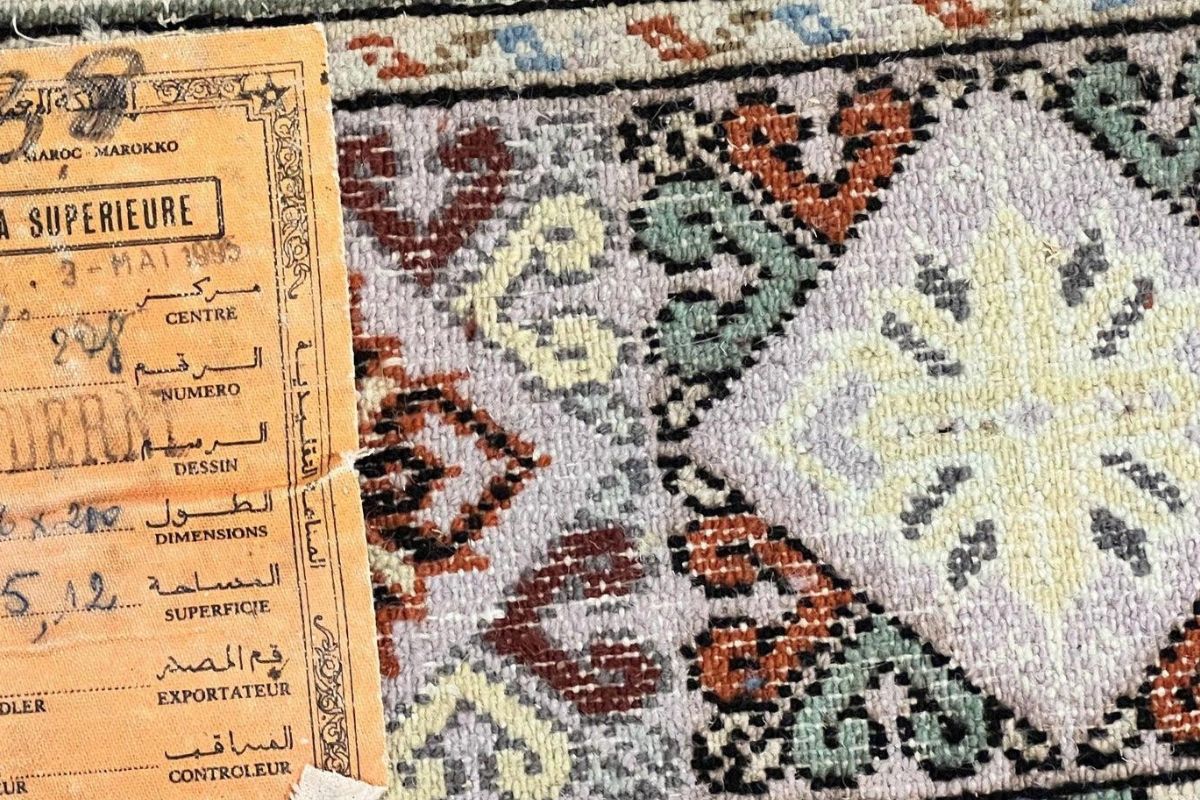
Two separate laws sit at either end of this journey and they are constantly confused. At the Moroccan end, genuine antiques, described as items over 100 years old, require an export permit from the Ministry of Culture under Morocco's heritage legislation. At the United States end, a bilateral cultural property agreement restricts the import of specific categories of Moroccan archaeological and ethnological material. Reading both carefully, an ordinary Amazigh wool pile rug of the kind this site covers appears to fall outside the US restriction, and outside Morocco's permit rule too unless it is genuinely a century old. Most are not.
Why this page exists
Buyers hear "cultural property law" and either panic or ignore it entirely. Sellers rarely raise it at all. The result is a question with real legal exposure attached and almost no accurate information available in the niche.
This page is not legal advice, gives no opinion on any specific rug, and cannot tell you what applies to your purchase. What it does is name the actual instruments, with dates, so you know what you are dealing with and who to ask.
Morocco's side: the 100-year permit
Morocco's framework is Law No. 22-80, on the conservation of historic monuments and sites, inscriptions, works of art and antiquity. Under it, genuine antiques, described in the sources consulted as items over 100 years old, are subject to export licensing and require a permit from the Ministry of Culture.
For contemporary craft, and that includes essentially all rugs made in recent decades, there is no export restriction. You buy it, you take it, and nothing else applies.
The obligation falls at the point of export, from Morocco. If you have bought something genuinely a century old, the paperwork is not optional and it is not something to sort out at the airport. The seller should be able to speak to it, and if a seller is claiming that kind of age while shrugging at the paperwork, those two positions do not sit together.
The United States' side: the cultural property agreement
The United States and Morocco entered into an agreement under the Convention on Cultural Property Implementation Act, and import restrictions on categories of Moroccan archaeological and ethnological material were imposed in January 2021. They were extended effective 14 January 2026 and now run through 14 January 2031, per US Customs and Border Protection's Federal Register notice.
Material on the Designated List may not be imported into the United States unless it is accompanied by documentation certifying that it left Morocco legally.
Why an ordinary Moroccan wool rug appears to sit outside both
This is the part worth reading closely, because the Designated List is specific and almost nobody in this niche has looked at it.
The archaeological category covers material dated roughly from one million BC to 1750 AD. It does include textiles, and the textiles it describes are linen, hemp and silk cloth used for burial wrapping, shrouds, garments, banners and sails. A twentieth-century Amazigh wool pile rug is none of those things, in neither material nor use nor date.
The ethnological category covers architectural elements, manuscripts, and ceremonial and ritual objects of Islamic culture from the Saadian and Alaouite dynasties, roughly 1549 to 1912. Again, a domestic wool floor rug woven for use in a household is not an architectural element, a manuscript, or a ceremonial or ritual object, and the great majority of rugs in the market postdate 1912 in any case.
So on the face of the list, the US restriction is aimed at a different class of object entirely. This guide reports that as a reading of the published categories, not as a legal opinion, and the list can be amended. If you are importing something you believe is genuinely old or unusual, check the current Designated List and, if there is any doubt, ask a customs broker or a lawyer rather than this page.
Readers outside the United States: this restriction is US-specific. Your own country will have its own rules on cultural property imports, and they are not the same. Morocco's export rule, on the other hand, applies to everyone leaving Morocco.
What to do if a seller genuinely claims 100-plus years
This is where the legal question loops back into the commercial one that runs through the rest of this site.
If a seller tells you a rug is a century old or more, that claim has consequences. It means an export permit is required, and it means the seller should be able to produce or arrange documentation. Ask for both, in writing, on the invoice.
What usually happens next is instructive. The age claim softens. As what "vintage" actually means on a Moroccan rug listing sets out, the vocabulary in this trade is loose, unregulated and frequently detached from actual age, and the Anou Cooperative has reported that a great deal of "vintage" Moroccan stock is new and treated to look old, covered in how new rugs are made to look old.
So the permit question is a useful test of a seller as well as a legal step. A seller who will put a hundred-year claim in writing and handle the permit is telling you something real. A seller who will not do either has answered a different, more important question. Is my Moroccan rug authentic covers what can and cannot be established about age.
If the rug really is that old, treat the purchase accordingly: proper documentation, a proper declaration, and professional advice. Customs, duty and declared value covers the arrival end, and shipping a rug home from Morocco the journey.
What this guide is not
It is not legal advice. It does not interpret the law for your circumstances, it does not tell you whether your rug is covered, and it does not offer any way to reduce or avoid a legal obligation.
These laws exist to protect cultural property, including the heritage of Amazigh communities whose work this site writes about, and that is a good reason for them rather than an inconvenience. Where a permit is required, the answer is to get one.
For anything genuinely old, ask the Moroccan Ministry of Culture, your own national customs authority, and a qualified lawyer or customs broker. Sources named on this page were read on 2026-08-04; laws and designated lists change, so check the current versions.
FAQ
Do I need a permit to take a Moroccan rug out of Morocco?
Only if it is a genuine antique. Morocco's heritage law requires an export permit from the Ministry of Culture for items over 100 years old. Contemporary craft, which covers almost all rugs on the market, carries no export restriction.
Can I bring a Moroccan rug into the United States?
Ordinary wool rugs are not what the US-Morocco restriction targets. The Designated List covers archaeological material up to 1750 AD, whose textiles are described as linen, hemp and silk burial cloth and similar, and ethnological material such as architectural elements, manuscripts and ceremonial objects from 1549 to 1912. Check the current list if your piece is genuinely old or unusual.
How long do the US import restrictions last?
They were imposed in January 2021 and extended effective 14 January 2026, running through 14 January 2031, per CBP's Federal Register notice. They can be extended again.
My seller says the rug is 100 years old. What should I ask for?
The age claim in writing on the invoice, and the export permit. If a seller will not provide either, treat the age claim as unsupported rather than treating the paperwork as optional.
Does this apply if I am not American?
Morocco's export rule applies to everyone leaving Morocco. The import restriction described here is US-specific, and your own country will have its own cultural property rules, which are not the same.
Leave a Reply