"Berber rug" is not one style. In a rug listing, it usually means one of several distinct named traditions grouped under a single, loosely used retail label: Beni Ourain, Azilal, Boujad, and others already covered on this site. The word "Berber" itself also has a contested history: it comes from an ancient exonym with roots meaning "foreigner" or "barbarian," and many Amazigh people and scholars reject it for that reason, preferring their own name for themselves, Amazigh. This guide uses both terms, and explains why.
Where the word "Berber" comes from, and why it's contested
"Berber" traces back to the Latin barbarus, itself from the Greek bárbaros, a term Greeks and Romans originally applied broadly to foreigners whose speech sounded unintelligible to them, later extended by Romans specifically to North African peoples encountered during Roman expansion into Numidia and Mauretania. That origin is documented in linguistic-anthropology sources including the Society for Linguistic Anthropology and Britannica's own entry on the Berber people.
The word's baggage doesn't stop in antiquity. Its root is widely noted to overlap with, and sometimes be treated as equivalent to, the Arabic word for "barbarian," which is a live reason many Amazigh scholars and activists reject "Berber" as a pejorative label rather than a neutral ethnonym. There's also a more recent political layer: French colonial administration in 20th-century North Africa institutionalized "Berber" as an official administrative category, part of a broader colonial strategy that treated Amazigh and Arab populations as separate groups to be managed differently. That history is one more reason the term carries weight beyond its dictionary definition.
Amazigh: the term the people use for themselves
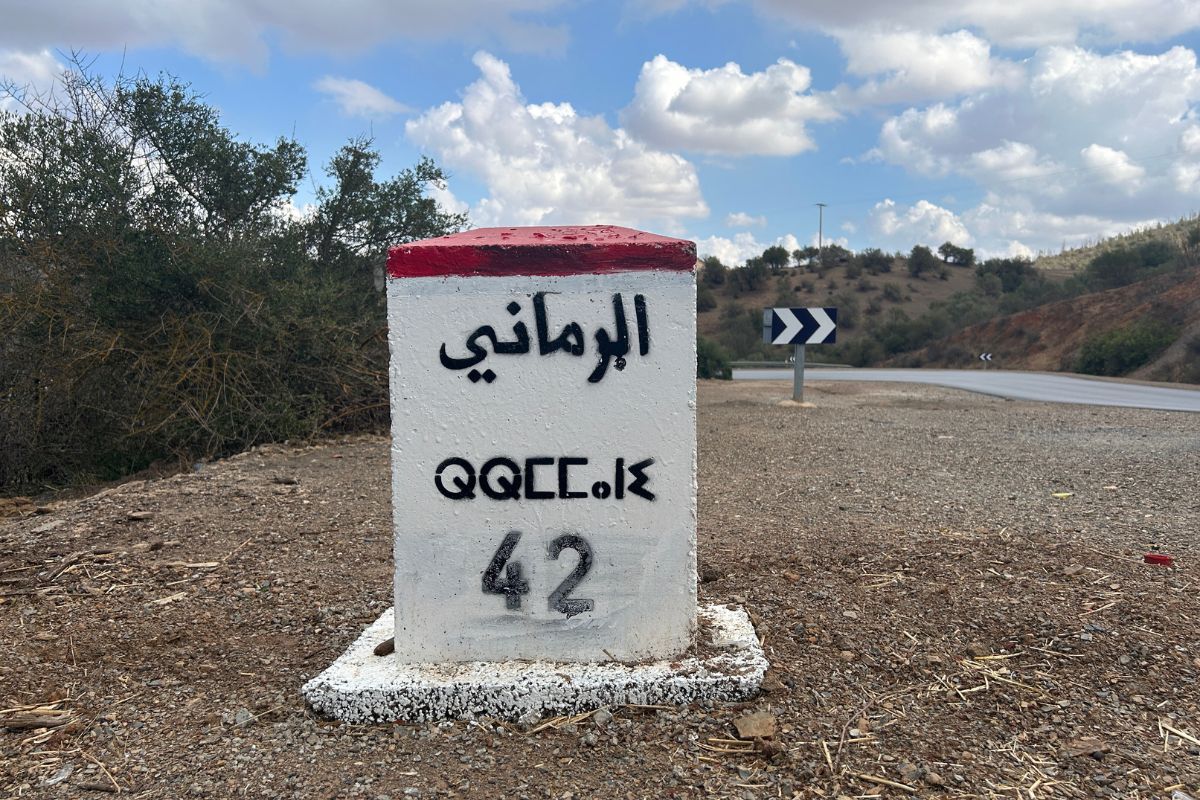
The people commonly labeled "Berber" from the outside use their own name for themselves: Imazighen (singular Amazigh). Linguistic sources gloss the term's root as meaning something close to "free people" or "noble free people", a self-description that stands in direct contrast to an exonym rooted in "foreigner" or "barbarian." Respecting that self-chosen name, rather than defaulting only to the externally imposed one, is a small but real editorial choice, and it's the reason every style page on this site introduces its subject as Amazigh weaving alongside the more commercially familiar "Berber" label.
None of this means "Berber" is a slur that must never appear. It's the term most buyers will search and most sellers will use, which is exactly why a guide that only ever said "Amazigh" would be less useful to an actual shopper trying to make sense of a listing. The goal here isn't to police vocabulary; it's to explain what the word is actually doing so a reader isn't left assuming it's a neutral technical term with a single fixed meaning.
What "Berber rug" means in a rug listing, in practice
Walk into any rug retailer's site and "Berber rug" functions as a broad category header, not a specific product description. Underneath that heading you'll typically find named traditions this site treats as genuinely distinct: the minimalist, mostly-undyed Beni Ourain; the colorful, freehand Azilal; the pink-and-magenta Boujad; flatweaves like Zanafi or Moroccan kilim and hanbel; and others. These traditions differ in region, material, technique, and look. Collapsing all of them into one umbrella term is convenient for a retailer's navigation menu, but it hides real distinctions a buyer benefits from knowing.
There's a parallel worth naming: the same collapsing happens with the word "Amazigh" itself in some usage, since it also refers to an enormously diverse set of peoples and languages across North Africa, not one homogenous group. "Berber rug" and "Amazigh weaving" both function, in casual use, as umbrella terms over real internal diversity. The difference is that one term's origin is external and contested, and the other is the term the people themselves use.
What "Berber" doesn't tell you
Because "Berber rug" is a retail catch-all, the word alone tells you almost nothing about region, era, dye type, or construction, the exact information a buyer usually actually wants. A listing that says only "vintage Berber rug" with no named style, no stated region, and no material detail is giving you less information than the trade actually has available for most of these traditions, several of which, like Taznakht, have real, citable, documented cooperative histories behind them. If a seller can't or won't go beyond "Berber rug" as a description, that's worth noting, not necessarily as a red flag, but as a prompt to ask for more.
A different confusion: "Berber carpet" in flooring
If you searched "Berber rug" and ended up reading about wall-to-wall carpet installation, you've run into a completely separate use of the word. In the US flooring trade, "Berber carpet" refers to a specific machine-made, loop-pile broadloom carpet style, sold by the roll for wall-to-wall installation, that took its name from a resemblance to the coarser texture of some Amazigh weaving but has no other connection to it. It's manufactured on entirely different equipment, sold through entirely different retail channels, and has nothing to do with an actual hand-knotted or handwoven Moroccan rug. This site covers hand-knotted wool rugs only, never wall-to-wall carpet of any kind. A loop-pile broadloom product and a hand-knotted rug are different objects with different care needs, a distinction worth keeping in mind if you ever compare cleaning advice between the two.
If a search result or a home-improvement forum is discussing carpet padding, stretching, or wall-to-wall installation under the word "Berber," that's this unrelated flooring product, not anything covered on this site.
How this site uses the two terms
This site uses "Amazigh" as the primary term for the people and the weaving tradition, and uses "Berber" where it reflects how the trade and search terms actually work, because a reader searching "Berber rug" deserves an answer, not a lecture. Where a specific named style, region, or cooperative is known, this site uses that specific name rather than resting on either umbrella term. That's the same discipline applied across every style page here: name what's actually known, and say plainly when a broader label is standing in for something more specific.
FAQ
Is "Berber rug" a real rug style?
No. It's a retail umbrella term covering multiple distinct named Moroccan and Amazigh weaving traditions, not a single defined style with consistent construction or origin.
Why do some people object to the word "Berber"?
Because it derives from an ancient exonym rooted in "foreigner" or "barbarian," and its root overlaps with the Arabic word for "barbarian." Many Amazigh scholars and activists consider it a pejorative label imposed from outside rather than a neutral name.
What does "Amazigh" mean?
It's the term the people themselves use, commonly glossed as "free people" or "noble free people," and is generally the preferred term over "Berber" in scholarly and activist usage.
Should I stop using the word "Berber rug" when shopping?
Not necessarily. It's the term most listings and search results actually use. This guide uses both terms for that reason, while being clear about the word's contested history and preferring named, specific styles over the umbrella label wherever possible.
If a listing just says "Berber rug" with nothing else, what should I do?
Ask the seller which specific tradition or region the piece is attributed to. See how to identify a Moroccan rug from a photo for what else to check before relying on a generic label alone.
Leave a Reply